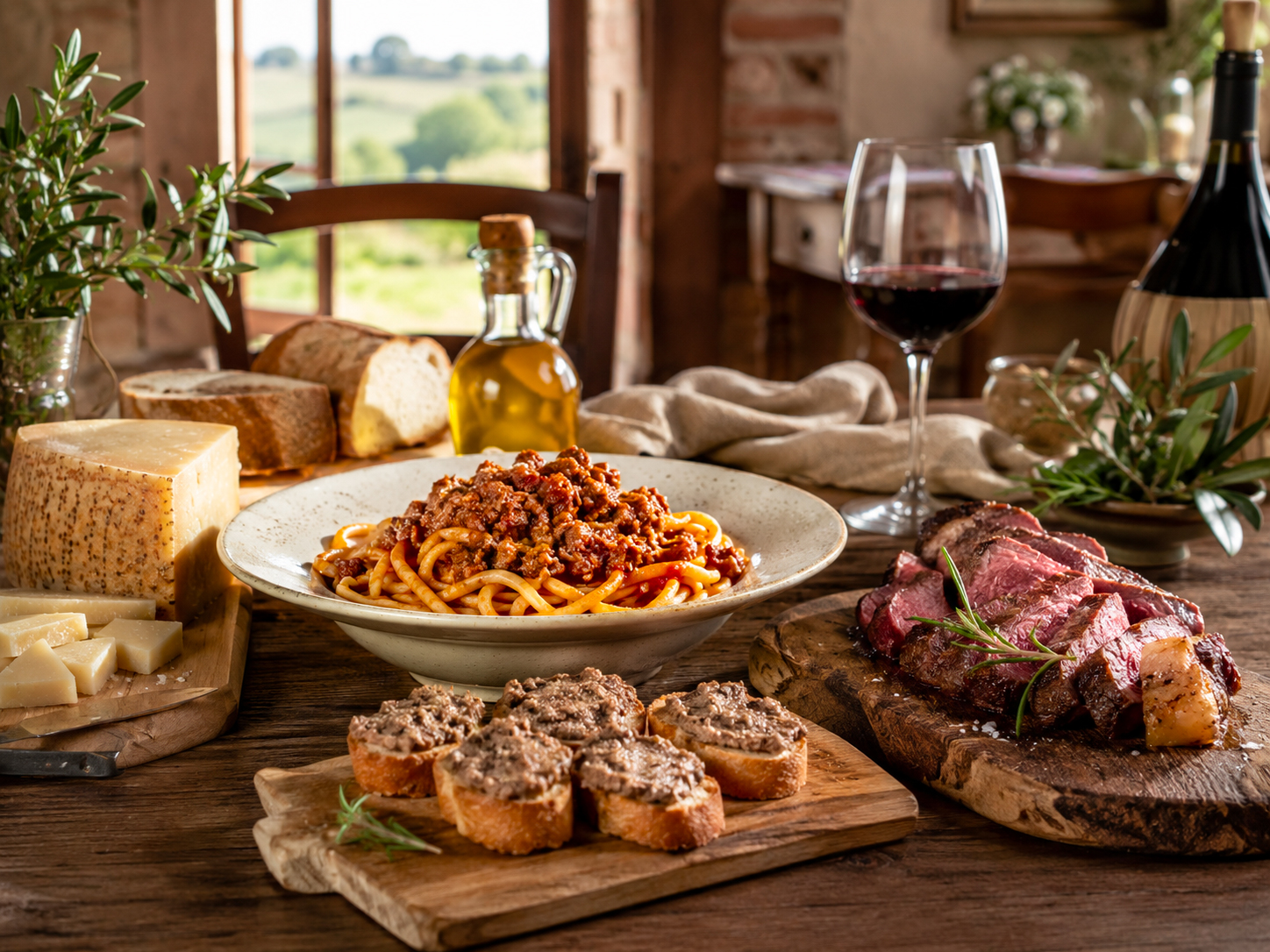
The cuisine of the Arezzo province reflects a Tuscany deeply rooted in the land, rural life, and the ability to transform simple ingredients into dishes with a strong character. Tuscan bread, extra virgin olive oil, meats, garden vegetables, fresh pasta, and slow cooking methods still form the foundation of a gastronomic tradition that varies from valley to valley and continues to influence contemporary cuisine.
Discovering the typical dishes of the Arezzo province means going beyond the most well-known Tuscan recipes. The Arezzo region boasts its own unique preparations, local variations, and gastronomic traditions that have developed over the centuries in the Valdichiana, Valdarno, Valdambra, Casentino, and other areas of the province.
It’s a cuisine built primarily on substance, seasonality, and the full use of raw ingredients. A gastronomic culture that can be respected even when reinterpreted, because tradition doesn’t necessarily mean the immutable repetition of a recipe: it can become the starting point for recounting the same territory through different techniques and sensibilities.
Arezzo cuisine: a tradition born from the land
Many of the traditional dishes of the Arezzo province originated in a rural, home-cooked kitchen where nothing was wasted. Stale bread became an ingredient in new dishes, vegetables followed the seasons, meats were enhanced by using even the lesser-quality cuts, and the most important recipes were often reserved for holidays and convivial occasions.
This origin explains why Arezzo cuisine is so characterized by slow cooking, rich sauces, bread-based preparations, and dishes capable of achieving a great intensity of flavor from seemingly simple ingredients.
The territory also played a decisive role. Arezzo is located in a position where different Tuscan gastronomic traditions meet and intermingle. However, each area maintains its own identity, linked to crops, livestock farming, available raw materials, and family traditions.
Black crostini, one of the symbols of the Tuscan table
Among the appetizers that best represent the Arezzo tradition are Tuscan crostini neri, a dish found in homes, trattorias, and at holiday lunches. The base is typically a flavorful mixture of chicken livers and herbs, blended until it reaches a consistency suitable for spreading on slices of bread.
As is often the case with popular recipes, there’s no single identical version in every family. Ingredients, texture, and method may vary, but the contrast between the Tuscan bread and the intense flavor of the preparation remains recognizable.
Black crostini is also interesting because it beautifully illustrates the relationship between contemporary cuisine and gastronomic memory. A seemingly simple recipe can be lightened, refined in texture, or presented differently without necessarily losing its connection to tradition.
It’s no coincidence that crostino nero also appears in Antico Portale’s offerings, alongside other dishes that incorporate Tuscan ingredients and flavors into a more contemporary cuisine.
Stale bread, vegetables, and oil: the humble cuisine that has become a gastronomic heritage.
Bread is a key ingredient in Tuscan cuisine, and in the province of Arezzo it has given rise to numerous recipes. The lack of salt in traditional Tuscan bread favors its pairing with flavorful ingredients and rich condiments, but above all, the need to salvage leftover bread from previous days has contributed to the creation of recipes that have over time become part of the regional identity.
Bread soup, for example, brings together stale bread, vegetables, legumes and cabbage in a substantial preparation especially suited to the colder months. It is a close relative of that gastronomic culture from which ribollita was also born, where recovery was not a fashionable choice but a normal domestic necessity.
Another example is pappa al pomodoro, made with just a few essential ingredients: bread, tomatoes, extra virgin olive oil, and herbs. This simplicity highlights how crucial the quality of the ingredients is in traditional recipes.
Panzanella belongs to the same cultural family, another way to breathe life into stale bread through vegetables, seasonings, and freshness. These dishes may seem extremely relevant today, because they emphasize seasonality, waste reduction, and the conscious use of ingredients, despite having originated long before these concepts entered the language of contemporary dining.
Fresh pasta and meat sauces in the Arezzo tradition
Fresh pasta plays an important role in the province’s cuisine. One of the traditional dishes associated with the region is macaroni, an egg pasta that can be served with particularly flavorful meat sauces.
Goose, duck, rabbit, and game are part of the gastronomic heritage of many areas of inland Tuscany. Slow cooking allows for the creation of intense sauces where time becomes a key ingredient. It’s no coincidence that even today, ragù, stocks, and slow cooking methods remain a privileged meeting point between traditional cuisine and contemporary dining.
Pici, though part of a broader Tuscan tradition, naturally find their place on provincial tables. Their substantial structure allows them to be paired with bold sauces and meat ragù. On Antico Portale’s menu, for example, they are served with a white Cinta Senese ragù: a combination in which a pasta strongly tied to Tuscan imagery dialogues with an equally distinctive raw material.
Griffins Aretina Style: A dish deeply rooted in Arezzo
Among the dishes that offer a direct insight into the local gastronomic history, grifi all’aretina deserves special mention. It’s one of the dishes that most closely identifies the city and the Arezzo region.
The recipe originates from the veal muzzle, traditionally stewed for a long time with tomatoes and herbs. It’s a preparation that perfectly captures a cuisine in which the less valuable parts of the animal weren’t discarded, but transformed through technique, patience, and cooking.
Today, griffins represent more than just a simple recipe: they are a testament to Arezzo’s popular culture. This is precisely why they continue to appear at food festivals and events dedicated to the rediscovery of local traditions.
Arezzo-style livers and the flavors of peasant cuisine
Another dish with a strong character is fegatelli, a dish common in central Italian cuisine and particularly rooted in the Arezzo tradition. The pork liver is traditionally wrapped in netting and flavored with ingredients such as bay leaves and wild fennel.
Here too, the recipe tells of a relationship with food that was very different from the contemporary one: every part of the animal had to be valued, and preservation, cooking, and the use of herbs were part of a domestic knowledge handed down over time.
They are intense flavours, which allow us to understand how far traditional Arezzo cuisine is from the idea of an indistinct Tuscan gastronomy. Behind the general label of “Tuscan cuisine” there are in fact territories, techniques and recipes with very precise identities.
Chianina: the link between breeding and the territory
When talking about the province of Arezzo, it’s impossible to ignore the Chianina. The breed takes its name from the Val di Chiana and is one of the most well-known Tuscan beef varieties.
Steak is certainly the most famous preparation, but meat can be used in many different ways. This is another interesting example of how a raw material deeply rooted in its territory can thrive in both the most basic preparations and contemporary interpretations.
At Antico Portale, for example, Chianina beef is featured on the menu in the form of tartare or burgers. It’s not necessarily a matter of reproducing a single historic recipe, but rather of maintaining a recognizable connection to Tuscany by choosing ingredients and flavors that truly express it.
Tuscan pecorino cheese, cured meats, and traditional appetizers
Arezzo’s cuisine isn’t just about elaborate recipes. Part of the Tuscan gastronomic experience is represented by products that can be served almost in their simplest form: cured meats, cheeses, bread, and olive oil.
Tuscan pecorino, with its varying ages and characteristics, pairs well with appetizers and charcuterie boards, but can also be used as an ingredient in first courses, fondues, fillings, and more modern dishes. The same ability to adapt to different moments of the meal is a hallmark of traditional regional cured meats.
It’s precisely in these cases that it becomes clear how much local cuisine depends on the raw ingredients. Technique and creativity can shape its form, but the result retains a connection to its place only if the ingredient continues to play a real and recognizable role.
Arezzo sweets: from baldino to gattò
The Arezzo province’s tradition also includes desserts lesser-known outside the region. One of these is baldino, the local name for castagnaccio. Chestnut flour is the star of this typically autumnal dish, instantly reminiscent of the landscapes and cuisine of the Apennine and hilly regions.
Even more closely tied to the Arezzo identity is the gattò all’aretina, a rolled biscuit pastry traditionally filled with Alchermes liqueur and a creamy filling. The name derives from the French “gâteau,” a testament to how even recipes now considered deeply local are often the result of encounters, influences, and transformations over time.
Among the seasonal preparations, the panina aretina is also worth mentioning, especially linked to the Easter period and present in versions that can vary significantly depending on family tradition.
From Arezzo tradition to contemporary Tuscan cuisine
Knowing the typical dishes of the Arezzo province doesn’t mean that local cuisine should remain unchanged. The traditional recipes themselves are the result of adaptations, available ingredients, influences, and handed down knowledge.
Contemporary cuisine can start with the same elements and take a different path. A pecorino cheese can become a fondue, a ragù can accompany a different pasta, a Tuscan ingredient can be paired with a technique born far from Tuscany. The important question, then, is not how closely a dish formally resembles a recipe from the past, but how much it still manages to maintain a meaningful connection with its territory.
This approach also characterizes Antico Portale in Valdambra, where the cuisine draws on Tuscan roots, without considering tradition as a barrier. The menu follows the seasons and combines recognizable elements of regional cuisine with contemporary techniques and interpretations: from crostino nero to pici with Cinta Senese white ragù, from pecorino to Chianina, to more free-spirited dishes like bao reinterpreted with Tuscan ingredients.
A territory is also known through what arrives on the table
Arezzo and its province boast a much more varied cuisine than a generic definition of “Tuscan cuisine” might suggest. Crostini neri, grifi all’aretina, fegatelli (a type of fried bread), pasta dishes with meat sauce, bread-based dishes, Chianina beef, pecorino cheese, and traditional desserts all speak to different eras, landscapes, and customs.
Visiting the Valdambra, Valdarno, and the province of Arezzo more generally means experiencing the region through its food. Some recipes deserve to be preserved in their most traditional form; others can become the foundation upon which to build something new.
It is precisely this dialogue between memory and the present that keeps local cuisine alive: acknowledging its roots without turning them into a museum, allowing ingredients, seasons, and contemporary sensibilities to continue to tell the story of Tuscany at the table.