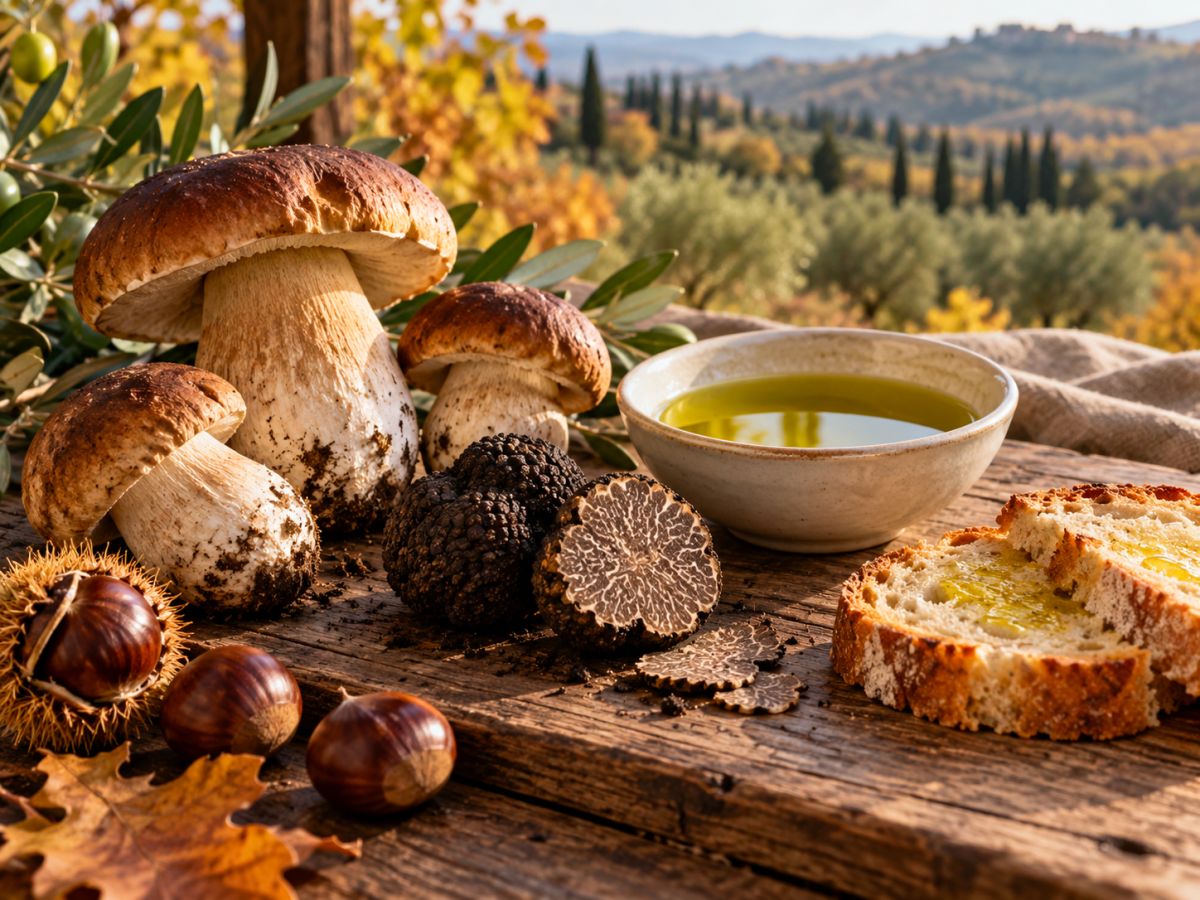
Valdambra in autumn can also be discovered through its food: the aroma of truffles, dishes made with mushrooms, and bread dressed with freshly pressed olive oil. Around Bucine, in the Arezzo area, a landscape of woodland, vineyards and olive groves accompanies a season when both ingredients and ways of cooking change.
For visitors to the valley, autumn offers an opportunity to get to know the area through its produce, distinguishing what comes from the Valdambra from the specialities of other parts of the province of Arezzo. For those who live here, it is a time to rediscover familiar flavours with fresh curiosity. The starting point is the same: follow the availability of ingredients, without expecting every product to arrive at once or to have the same characteristics every year.
Valdambra in autumn: discovering the area through its cuisine
An autumn day in the Valdambra might combine a village visit, a walk and a meal. The countryside around Bucine offers a close view of the relationship between the agricultural landscape and food: olive groves lead to olive oil, vineyards to wine, and woodland to ingredients that find their way into seasonal recipes.
To help plan a route, the regional tourism website suggests eight itineraries for discovering the Valdambra, with stops exploring villages, countryside and historic sites. In autumn, choose your route with daylight hours and ground conditions in mind, leaving time to pause rather than turning the day into a rush between destinations.
Food completes this exploration. Tasting an ingredient after travelling through the landscape it comes from helps reveal its value: behind a bottle of olive oil or a seasonal dish lie crops, harvests and decisions about how to process them.
Truffles in the Valdambra: understanding the product before choosing
Truffles are part of the valley’s food heritage. Bucine’s Tourist Office includes them among the typical products of the Valdambra, alongside extra virgin olive oil, wine, cheese and honey. Their presence depends on soil characteristics and their symbiotic relationship with the plants alongside which these underground fungi grow.
Simply referring to “truffle”, however, tells you little about what will arrive on your plate. Different species have different aromas, availability and culinary uses. When buying a product or choosing a restaurant dish, it is useful to ask which truffle is being used and whether it is fresh truffle or a condiment containing it.
Making the most of truffles at the table
One of the most recognisable ways to enjoy white truffles is to add them raw just before serving. An unobtrusive base, such as egg pasta or an egg dish, allows their aroma to come through. Black truffles can also lend themselves to preparations involving cooking, depending on the species and recipe.
Visit Tuscany also discusses this distinction in its article on truffles and mushrooms in the Valtiberina, another valley in the Arezzo area. The Valdambra and the Valtiberina are distinct places: discovering both can enrich a food-focused journey, but it does not mean automatically attributing the products of one area to the other.
When choosing a dish, consider all its ingredients together. A very intense sauce can mask the subtleties of truffle, while a balanced preparation gives them room to emerge. The pleasure of tasting depends on this relationship as well as on the quality of the ingredients.
Mushrooms and porcini: autumn follows the rhythm of the woods
Mushrooms are among the most eagerly anticipated ingredients in Tuscan autumn cooking. Their availability, however, depends on environmental conditions: rainfall, temperatures and the characteristics of the woodland all influence their growth. The calendar provides a general guide, but it cannot guarantee the same abundance every season.
Within the Arezzo area, the Valtiberina is a notable destination for porcini, described by the regional tourism website alongside other woodland products. For visitors staying in the Valdambra, this offers a way to explore the wider province while remaining attentive to the actual origin of the ingredients they buy or are served.
Dishes that bring out the flavour of mushrooms
Tagliatelle, risottos, soups and side dishes offer different ways to enjoy mushrooms. Fresh pasta highlights the sauce; a soup combines their flavour with pulses and vegetables; a side dish allows greater focus on the mushrooms’ own texture and taste.
The form of the ingredient matters too. Fresh and dried mushrooms have different uses: fresh mushrooms offer more opportunity to appreciate their texture, while dried ones can add depth to stocks, sauces and slow-cooked dishes. Asking which mushrooms are included and how they are used makes it easier to choose according to your preferences.
You can also get to know the woodland simply by taking a walk, without necessarily combining the outing with mushroom picking. On a journey devoted to food, buying from knowledgeable suppliers or choosing a restaurant dish allows you to focus on the tasting experience.
New-season olive oil: a taste of the olive groves
The arrival of new-season olive oil is one of the most distinctive moments of the Tuscan autumn. The term refers to oil made from the latest olive harvest: a product best understood through tasting and information from the producer, rather than judging its quality by colour alone.
Olive growing is part of the Valdambra’s identity. The Municipality of Bucine has developed an initiative to protect olive biodiversity, also linked to the Olivone di Montebenichi, the area’s monumental olive tree. This relationship between trees, landscape and production makes olive oil a tangible starting point for getting to know the valley.
From bread to vegetables: tasting new-season olive oil
A slice of Tuscan bread provides a simple base for an initial taste. Try comparing the same oil on bread and on a warm dish, noticing how the perception of its aroma and the balance of each mouthful change.
Olive oil can finish a pulse soup, accompany cooked vegetables or give character to a simple preparation. The quantity and the pairing make a difference: an assertively flavoured oil can take centre stage, while a gentler profile gives more space to the other ingredients.
When buying oil, ask the producer about the harvest, the olive varieties used and the oil’s characteristics. These questions can help you choose a bottle suited to your cooking and understand the work that comes before the tasting.
Pumpkin, chestnuts and warming dishes: the season’s other flavours
Truffles, mushrooms and new-season olive oil may be highlights, but autumn cooking also includes more everyday ingredients. Pumpkin, leafy vegetables, pulses and fruit provide the basis for dishes with different balances of sweetness, texture and seasoning.
A smooth pumpkin soup can be paired with a crisp element; a bean soup can gain character from bread and olive oil; vegetables can become the centre of a dish rather than remaining a simple accompaniment. These possibilities show how varied seasonal cooking can be, even when it begins with just a few ingredients.
Chestnuts belong to the wider story of autumn in Tuscany. For anyone wishing to explore this theme beyond the Valdambra, Visit Tuscany introduces some autumn traditions and festivals celebrating local produce. Before planning a visit, consult the organisers’ current programme.
An autumn dinner at Antico Portale
Following the seasons also means accepting that a restaurant’s offering will change. An ingredient may be available for only a short time, arrive later than expected or suggest a different preparation. This attention to ingredients is what makes returning to the table at different times of year so rewarding.
At Antico Portale, in Capannole di Bucine, contemporary Tuscan cuisine begins with the region and reinterprets its flavours through technique and exploration. The menu follows ingredient availability and ripeness: when choosing your autumn dinner, start with the menu page and the dishes available at the time of your visit.
After a day among villages and countryside, sitting down to a meal is another way to continue discovering the Valdambra. For information about the current seasonal dishes and to book, use the Antico Portale contact details to plan an evening devoted to the flavours of the season.